Penetration Basics – Zimbra Version Detection

Onedaysec
2 min read
0 views
docx image 1769397690012 0 6ef196ffce

Penetration Basics – Zimbra Version Detection

0x00 Preface

This article will introduce multiple methods for Zimbra version detection, implement automation via Python, record development details, and open-source the code.

0x01 Introduction

This article will cover the following content:

Implementation Ideas

Implementation Details

Open-Source Code

0x02 Implementation Ideas

There are many methods to check the Zimbra version, each with its own advantages and disadvantages; the specific methods are as follows:

1. Via Web Management Page

Access the 7071 management page via a browser; the current Zimbra version will be displayed on the main page.

For example, my test environment displays:

Zimbra Version: 9.0.0_GA_4273.NETWORK

The version obtained via this method is an accurate version

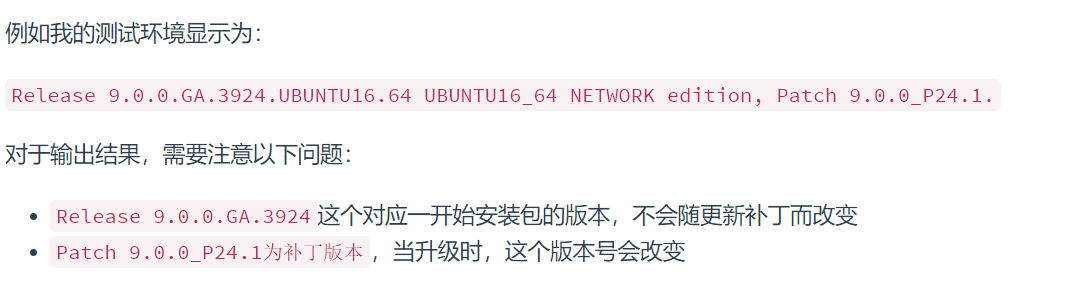
2. By executing commands

【技术原创】渗透基础——Zimbra版本探测

【技术原创】渗透基础——Zimbra版本探测

Note:

For Zimbra patch updates, refer to:

https://wiki.zimbra.com/wiki/Zimbra_Releases/9.0.0/patch_installation

3. Via Zimbra SOAP API

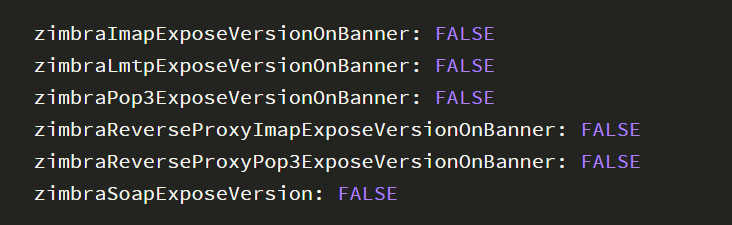
In the default configuration, the zimbraSoapExposeVersion property is FLASE, query command:

【技术原创】渗透基础——Zimbra版本探测Return result:

【技术原创】渗透基础——Zimbra版本探测After setting the zimbraSoapExposeVersion property to TRUE, the version can be obtained via the Zimbra SOAP API; the command to modify the property is:

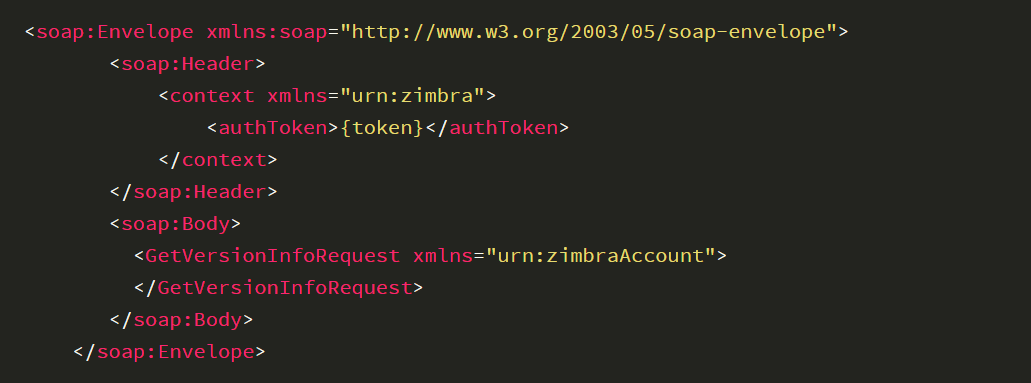
【技术原创】渗透基础——Zimbra版本探测Example of the sent SOAP format:

【技术原创】渗透基础——Zimbra版本探测Return result under default configuration:
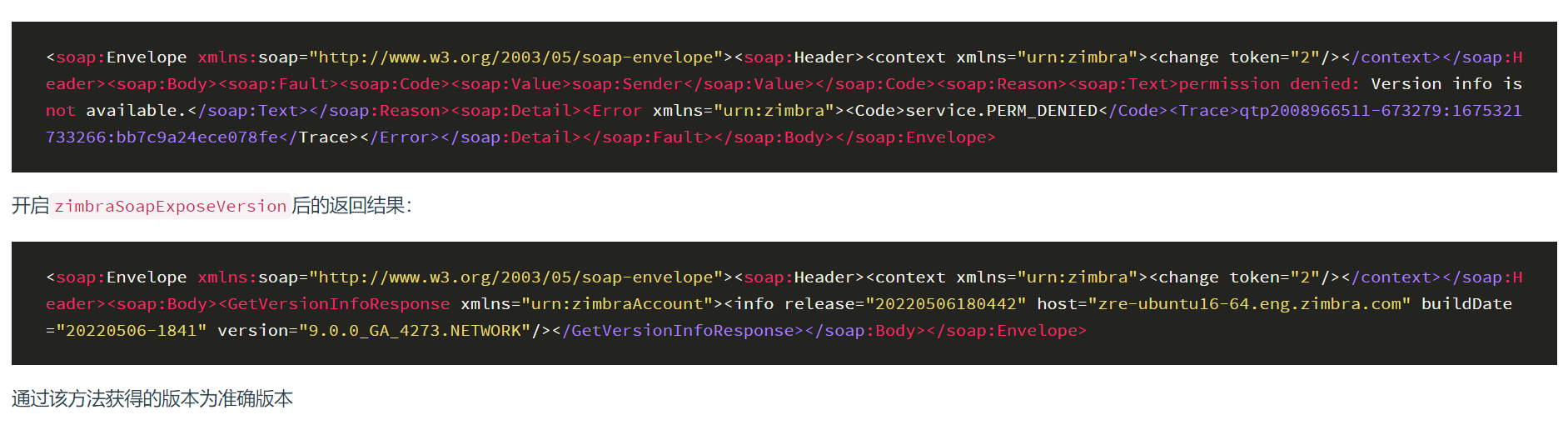
【技术原创】渗透基础——Zimbra版本探测

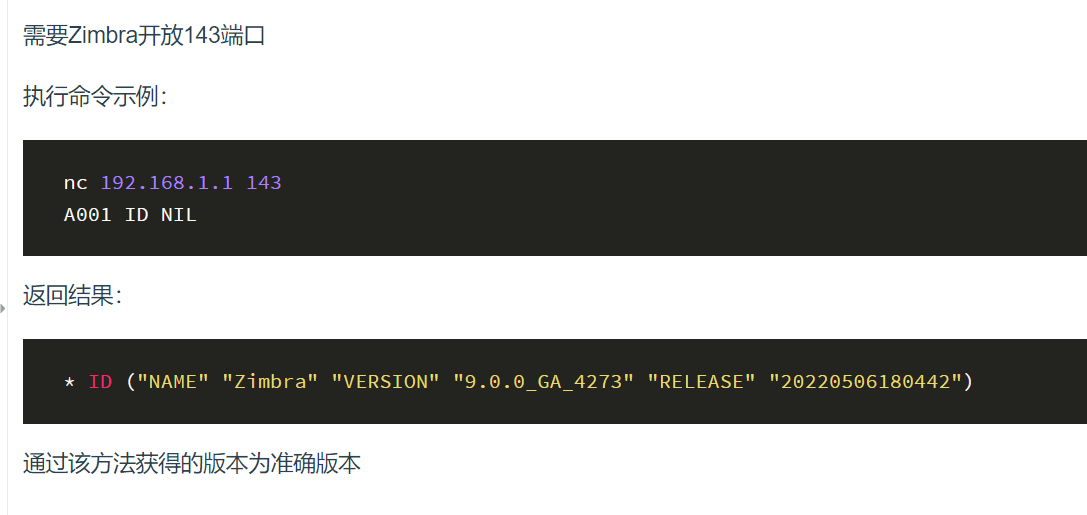
4. Via IMAP protocol

【技术原创】渗透基础——Zimbra版本探测

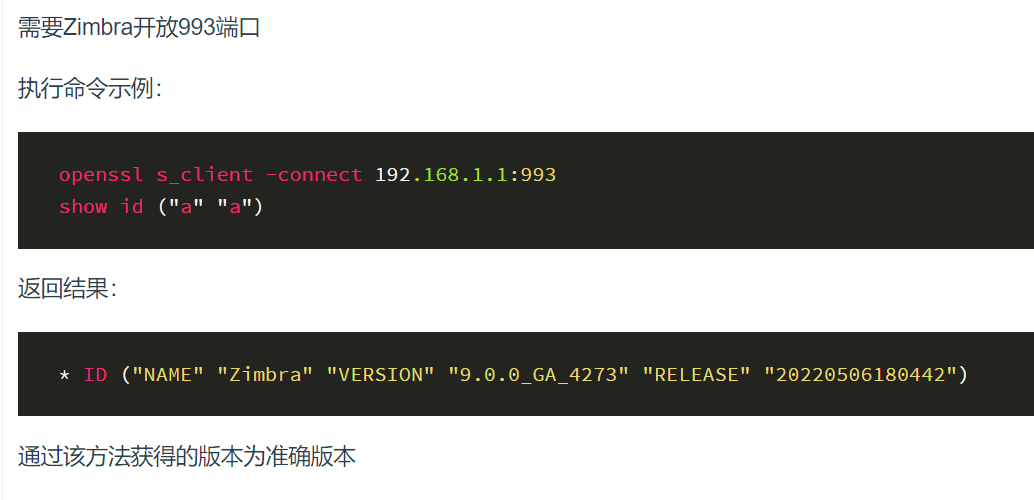
5. Via IMAP over SSL protocol

【技术原创】渗透基础——Zimbra版本探测

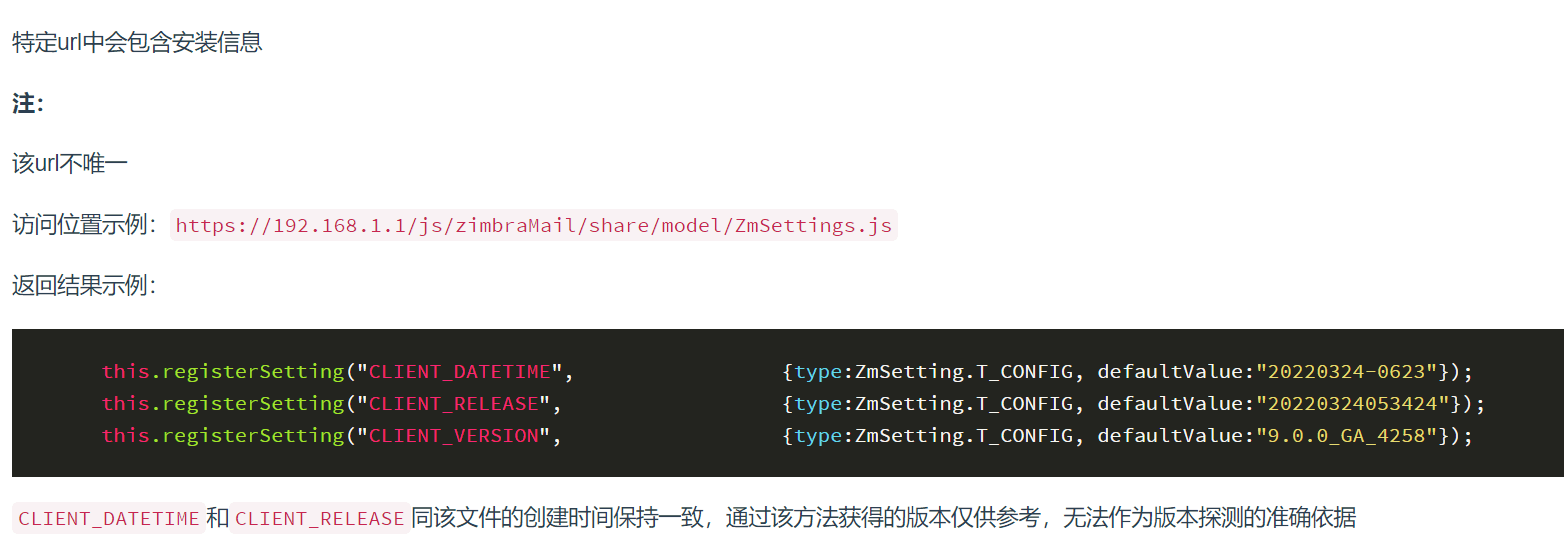
6. Via specific URL

【技术原创】渗透基础——Zimbra版本探测

0x03 Implementation Details

Combining the above detection methods, to adapt to various environments, three methods are selected for program implementation: via IMAP protocol, via IMAP over SSL protocol, and via specific URL

1. Via IMAP protocol

Complete example code:
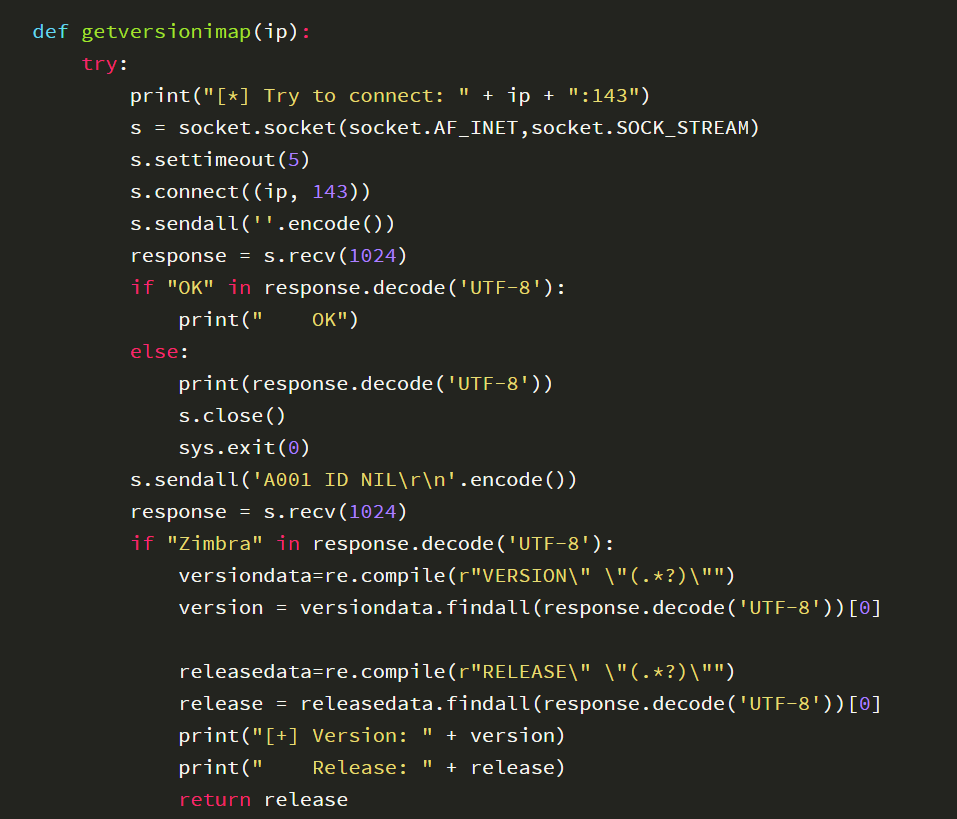
【技术原创】渗透基础——Zimbra版本探测【技术原创】渗透基础——Zimbra版本探测

2. Via IMAP over SSL protocol

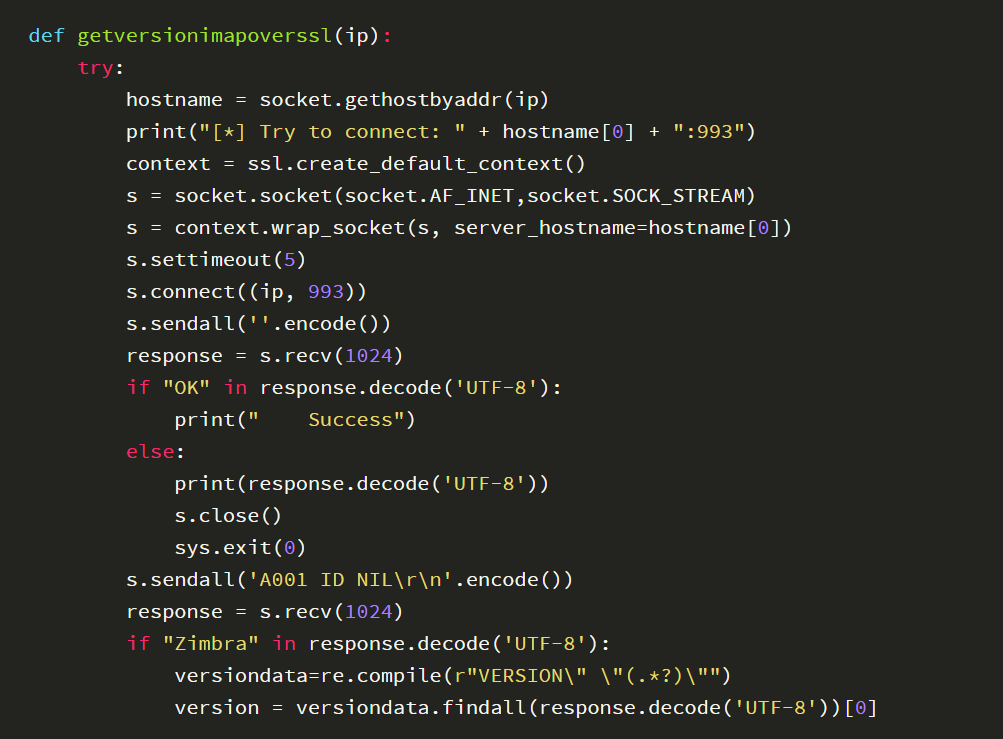
Need to convert IP to hostname as a parameter, example code:

【技术原创】渗透基础——Zimbra版本探测

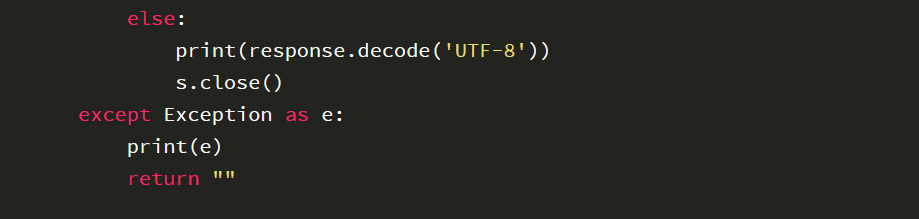
Complete example code:

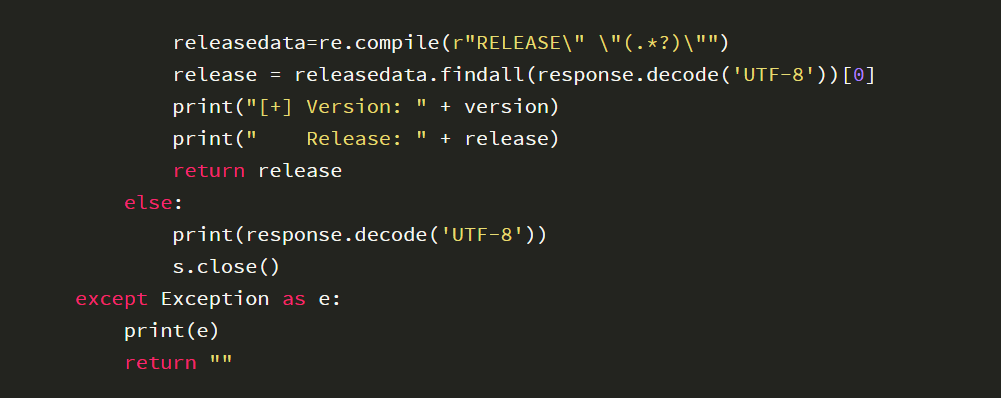
【技术原创】渗透基础——Zimbra版本探测【技术原创】渗透基础——Zimbra版本探测

In some environments, converting IP to hostname fails, leading to an error: [Errno 11004] host not found, so the IMAP protocol is prioritized in the program's decision logic.

3. Via specific URL

Complete example code:
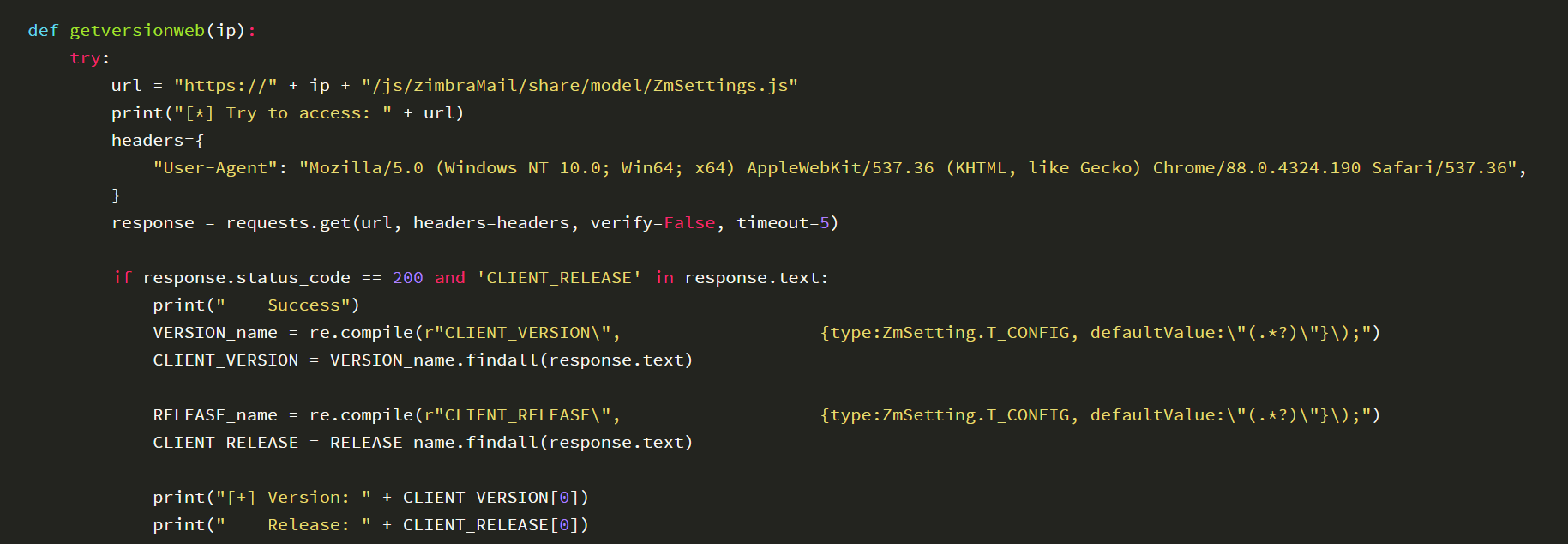
【技术原创】渗透基础——Zimbra版本探测【技术原创】渗透基础——Zimbra版本探测

0x04 Open Source Code

The complete implementation code has been uploaded to GitHub, address as follows:

https://github.com/3gstudent/Homework-of-Python/blob/master/Zimbra_GetVersion.py

The code first attempts to obtain version information via a specific URL, then reads version information via the IMAP protocol; if that fails, finally reads version information via the IMAP over SSL protocol.

0x05 Summary

This article introduces multiple methods for Zimbra version detection, compares their advantages and disadvantages, selects effective methods and implements automation via Python, records development details, open-sources the code, and serves as a good learning example.


Related Questions & Answers

Why might penetration testers choose IMAP-based methods over the web management page for Zimbra version detection?

The web management page (port 7071) may not always be exposed to the internet or could be restricted by firewall rules, making it unavailable during external penetration tests. IMAP-based methods (ports 143 or 993) are often more accessible because they are part of the email service that must be reachable for legitimate users. The article shows that IMAP can reveal the Zimbra version, and the Python script prioritizes a specific URL first, then IMAP, to maximize success in diverse network environments.

What is the role of the zimbraSoapExposeVersion property in Zimbra version detection?

By default, the `zimbraSoapExposeVersion` property is set to FALSE, which prevents version information from being exposed via the Zimbra SOAP API. If an administrator sets it to TRUE, the version can be retrieved by sending a SOAP request. This property is a key security consideration, as it controls whether attackers can easily fingerprint the Zimbra version through the SOAP interface. The article discusses this as one of several detection methods, alongside IMAP and URL-based techniques.

How does the Python script in the open-source code handle failures when detecting the Zimbra version?

The Python script first attempts to obtain version information via a specific URL, then tries the IMAP protocol, and finally falls back to IMAP over SSL. This priority is necessary because in some environments, converting an IP to a hostname for IMAP over SSL can fail with an error like '[Errno 11004] host not found.' The complete code is available on GitHub, linked in the [original article](/news/penetration-basics-zimbra-version-detection), and illustrates a practical approach to automating version detection.

What are the main methods for detecting a Zimbra version during a penetration test?

The article outlines several methods, including accessing the 7071 web management page, executing commands on the server, querying the Zimbra SOAP API, using IMAP or IMAP over SSL protocols, and checking a specific URL. Each method has its own advantages and disadvantages; for example, the web management page gives an accurate version but may not always be accessible, while IMAP-based methods can work in more restrictive environments. This is part of a broader series on [Penetration Basics – Zimbra Version Detection](/news/penetration-basics-zimbra-version-detection) and similar techniques for other services like [Minio](/news/penetration-basics-minio-version-detection) or [WebLogic](/news/penetration-basics-weblogic-version-detection).

Continue Reading